Widget By Devils Workshop

WELCOME TO KAYAK FISHING ADVENTURES :

This website was created to house internal and external drafts containing reports associated with the art of angling and our Kayak Fishing Adventures. Based in and around cities and locations throughout Australia, these tales of experience, knowledge and info are for all to enjoy and all content, text and images contained herein are deemed strictly copyright ( (C) 2006 - 2012, all rights reserved ).

For more information, please read our websites Terms of use.

Sunday, July 17, 2011

NSW - BRAVING THE COLD OF WINTER 16/7/11

Photobucket

It is often hard to drag yourself out of bed before the dawn to go fishing in winter - but in many locations the winter action can be better than in the warmer months, and you will often have the place to yourself. And the reward of a fish you've battled the elements for is priceless.

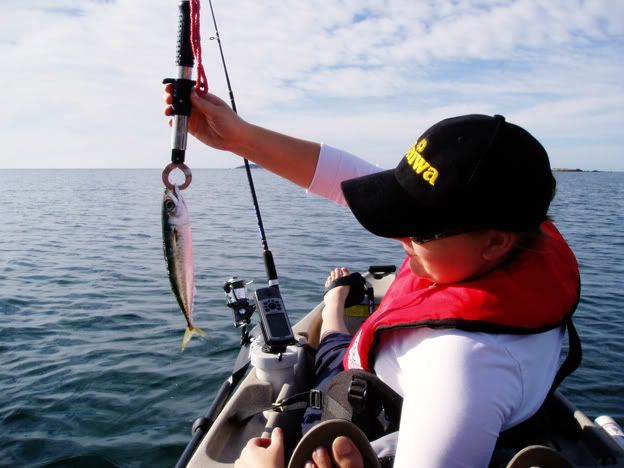
I headed to a favorite winter spot recently to target snapper offshore. Seabreeze told me to expect about 2 metres of swell and a light breeze. It was spot on. The swell however was a bit unusual in the way it was forming curling waves close to shore, and the normally safe passage out to deeper water was a bit iffy. I managed to get out without incident, and fished for over an hour without a sniff from anything except an unlucky but welcome squid who was hooked on a plastic right on the tip of the candle. I cleaned him immediately, stowed the hood in the cooler and saved the tentacles – I haven’t used bait offshore for ages, but when times are tough it can make the difference.

A call to a friend in the know gave me hope for the coming tide change, and I’d barely stowed the phone in the dry bag when the rod I’d rigged with a squid tentacle on a jighead showed signs of life, and in came a small but legal snapper. Things were looking up when I dropped what felt like a better snapper the next cast. A local kayak fisherman John, who I’d seen launch a little after, paddled over and we exchanged theories on snapper this season – it has been a bit of strange one and the normally reliable plastics have not been producing with the same regularity as normal.

I repositioned myself about where I thought I'd picked up the last fish, threw out a plastic and set about rigging another squid tentacle on the other rod. I don’t think the plastic even hit the bottom, the reel started screaming and it felt like a monster. After 3 or 4 minutes I knew it must be getting close, but the colour I was seeing down below didn’t look quite right……Sure enough it was a fighting blue morwong. They would pull a snapper backwards in a tug of war. He went 48cm and was stowed in the cooler bag.

Over the next hour or so I managed a couple more barely legal snapper, and one good one on a 5” jerk shad which went 50cm on the nose. The journey back in through the ‘safe’ channel was seriously dodgy and I almost came unstuck a few times as the swells picked up the back of the yak and slewed it sideways almost onto the rocks. This was quite amusing to some of the young grommets standing nearby. To say it was a relief to stand on dry land is an understatement.

Friday, July 15, 2011

ICAST 2011 - BEST OF SHOW (REVOLUTION 11)


Oceanside, California – July 13, 2011 – Hobie Cat’s popular Mirage Revolution 13 and Quest 13 now have little brothers, the Mirage Revolution 11 and Quest 11. With the same angler-friendly design, these shorter, lighter models cut through the water like knives through butter. They will be sure favorites for small to mid-size anglers looking to stalk fish with compact, lightweight and maneuverable fishing kayaks.


The Mirage Revolution 11 is powered by Hobie’s patented MirageDrive® pedal system while the Quest 11 accommodates those who prefer to paddle. Fitting a niche that has long gone unanswered, they are first of their kind integrating the feel of longer touring kayaks with shorter more maneuverable river kayaks. They are proudly made in the U.S.A.

Both boats are fast and nimble, track straight and have a sharp turning radius. The cockpit areas include a large front hatch for storing plenty of gear as well as a center eight-inch round hatch. Two molded-in rod holders make trolling easy. Hobie’s Livewell can be added into the trunk areas and can accommodate additional rod storage and live bait fishing. These kayaks will be favorites among anglers looking to fish shallow, fast moving water. But it does not stop there…they are equally as proficient in calm water and ocean waves. There is no learning curve on either boat. They do not use gas and they go places that powerboats cannot like rocky shallows, up narrow creek channels and over prop-snagging vegetation.

A series of fishing-friendly accessories makes it possible for anglers to customize and fit their own preferences. Hobie’s Livewell has a high-flow, self-priming Attwood pump, a six volt sealed gel cell battery, adjustable drain and the capability of holding up to eight gallons of water. A Plug-In Hobie Trax “2” Cart with pneumatic wheels provides for easy rolling of heavy loads over rough terrain or soft sand. Turbo Fins can increase boat speed by over ten percent. New from Hobie….the first ever Horizontal Rod Holder Kit that lets anglers in any kayak, Hobie or otherwise, store rods along either or both sides of their vessel. These are only a sampling of what is available.

Both kayaks are offered in a variety of color choices including Caribbean Blue, Red Hibiscus, Golden Papaya, Ivory Dune, and Olive. They are constructed of seamless rotomolded polyethylene hulls and are designed with open-deck construction. Two-piece paddles with fiberglass shaft and deluxe, padded back-support seatbacks are included with both models. They are easily transportable in the back of a pickup truck or on a roof rack. And, of course, both boats meet the National Marine Manufacturers Association certification requirements for flotation.

HOBIE MIRAGE REVOLUTION 11 The defining feature on the Mirage Revolution 11 is Hobie’s patented MirageDrive. The self-centering padded pedals are connected to two underwater flippers, much like penguin wings; and are locked and unlocked from the kayak with the Click and Go system. Steering is controlled via oversized fingertip steering handle on the left side, making it easy to cast, hook, and land fish while maneuvering to that secret spot.
Length: 11’ 6”
Width: 29”
Hull Weight: 47 lbs.
MirageDrive Weight: 6.6 lbs.
Capacity: 300 lbs.
Additional Standard Features: Oversized forward hatch. Two eight-inch Twist and Seal hatches. Two mesh-covered stowage pockets. On-deck receptacle with cap for optional accessories post or sail mast, dive flag, or nav-anchor light. Deluxe padded seatback with lumbar support. Two molded-in mid-boat carrying grips. Gear bucket. MSRP: USD $1749

HOBIE QUEST 11
Length: 11.1’
Width: 29”
Hull Weight: 47 lbs.
Capacity: 300 lbs.
Additional Standard Features: “Easy Open” hinged hatch with access to large forward storage area. One eight-inch Twist and Seal hatch conveniently located in front of the seat. Aft room for second eight-inch optional hatch for additional storage. Adjustable foot braces for paddling leverage. Two mesh-covered stowage pockets. Two molded-in mid-boat carrying grips. Gear bucket. MSRP: USD $949

Wednesday, July 13, 2011

KAYAK FISHING MAGAZINE ISSUE #40 (ONLINE)

Photobucket

The latest edition of Kayak Fishing Magazine has just come online, packed with all the quality features and articles that make them the largest and most read kayak fishing website and publication anywhere. From featured articles, interviews, angler of the month, gear guides and a world wide tournament calender, Kayak Fishing Magazine has a lot to offer our fishing community and best of all its free!

(This issue has a great article on survival, 'Seven Hours Until Dark')

To view the latest edition of KFM, click on the links below:

Monday, July 4, 2011

WHICH KAYAK FOR ME? - THE AGE OLD QUESTION


As our hybrid sport progresses beyond the initial grasp of the subject so does the choice when picking a kayak to fish from. In the early infancies the kayak models adaptable to fishing were few and far between, these days however it can seem a little daunting for the uneducated. Therefore KFA have a few pointers we would like to educate readers on, it just makes plain sense to help clarify things further.

You may be an active individual that regularly pushes your body’s boundaries, or you may be someone looking to regain some fitness and recuperate old wounds. Whatever the reason, Kayak Fishing does not and will not discriminate against you. With 52 weekends a year it’s an activity that even the most dedicated fulltime workers can enjoy. Within the space of a few months not only will you notice some categorical health benefits but your rank of pure amateur status and knowledge on the subject will platform you with your peers… After all, this mighty amalgam sport is still growing.


Where you plan to fish (Key is percentage):

Being realistic with where you plan to fish most of the time will help your final decision be a wise one. Before approaching the thought of purchasing keep in mind what brought you the idea in the first place. Did you spy someone flicking the flats of your local estuary or departing next to the boat ramp at your favourite haunt? Is this where you want to fish or do you have much grander, offshore style plans in mind?

If you’re sticking to small creeks & flat water a smaller plastic kayak like a Perception ‘Minnow’ / Australis ‘Bass’ around the 3 metre mark might be the best choice. Its shorter length will allow you to turn easily in tight corners, like amongst mangroves. A smaller kayak will also weigh less, allowing you to portage (Carry) the kayak cross county to get to rarely fished destinations.

For example, if you have a creek that is broken in to pools or with trees across it the kayak can easily be lifted out and ported around the obstruction. The advantage of a plastic kayak in these situations is it will take the bumps and scratches without you giving a second thought; this is no place for a South African Fishing Ski!

That’s not to say the fibreglass Skis don’t have there recompense too, much of Australia’s surrounding coastline is subject to swell (With little or no shelter). While access to the sandy beach is easy enough for any kayak, surf launching comes into its own a Ski. The ability to stow long rods, fish finders and miscellaneous gear below deck before judging distance between sets puts you in a league of your own.

The wave hopping performance is only really comparable to the Rescue board features of our strongest beach icon, the famous Surf Lifesavers. Punching over waves rather than through, surfing waves in on return rather than avoiding them and skeg style tracking are just a few benefits that typify South African / Australian coastal conditions.


Key benefits of the right choice (Examples over wrong):

There are two types of Kayaks that are commonly used to fish from, the S.O.T (Sit on top) and the S.I.K (Sit in Kayak). Either are available in both Polyethylene (Plastic) or Fibreglass (Kevlar/Carbon too), all offering ample opportunities to get you fishing and on the water. Once again, depending on what body of H20 you wish to fish there are models, makes and finishes to suit almost everyone (Observe your waterways).

S.O.T Polyethylene Kayaks allow for exaggerated freedom of movement on the deck, providing the ability to move around and mount or dismount simply. Being of a draining deck design, any water taken onboard simply self bails through gravity fed scupper holes that exit below the waterline (A must for S.O.T models). They are often heavier and wider than a S.I.K, making use of storage features like tank wells above deck rather than below. The only real downside to a S.O.T is the users exposure to the elements, be it sun, rain or wind your uncovered lower body is often left to the weathers mercy.

S.I.K Polyethylene Kayaks provide shelter below deck, removing the sun off your legs and providing a cockpit rim to install watertight skirts. Sitting slightly below the waterline this style of Kayak fits in the more recreational category. The bigger, more open cockpits whilst providing ample storage room prohibit sideways movement below deck. A S.I.K designed for fishing will be slightly wider than a traditional Sea Kayak, adding stability at slower speeds while incorporating many of its design features (Screw lid storage, Bulkheads).

The only real downside to a S.I.K is its ability to recover from capsizes, water tight bulkheads will provide vessel flotation but a lack of scupper holes will mean your Kayak is much harder to recover from a swamped position (A manual bilge pump is a must).

Certain hull shapes, materials, seated positions and ultimately differing models all have a place in the scheme of things. Smaller sit in kayaks (SIK) suited to skinny water (Tidal creeks, freshwater rivers) have certain abilities that shine in areas that a large sit on top (SOT) fibreglass fishing ski (Purpose built for offshore angling) would struggle. It’s a vice versa scenario, the fibreglass ski excels in surf launches and totally eclipses anything the ‘Minnow’ style has to offer in the same situation (Be that safety, fishing ability or your inherent nous whilst using).


Usability / Portability (Roof racks, trailer options, storage):

One of the first and flawed mistakes many make when purchasing a kayak is including ‘Loved ones’ initial interest as a binding marriage. While I am sure there are plenty of exceptions to the rule (Including one made by yours truly) you can often find yourself without a full time dedicated fishing partner. Some tandem kayaks are made to be fished one up adequately but many have there drawbacks when venturing out solo. It’s worth noting tandem kayaks often weigh in excess of 30 kilograms and are elongated and difficult to transport and handle alone.

It’s at this stage that portability and hull weight issue really comes to the forefront of your decision, was it the right one? Most kayaks are transported on roof racks (either permanent or removable soft racks) or on purpose built trailers. Loading your chosen craft onto your cars roof is cumbersome at the best of times; if you can’t lift it up there comfortably it may start to gather dust in your garage (Unless you go the more expensive trailer option). Take into consideration your health, strength, ability when studying a kayaks advertised weight (Can you lift it alone easily?) and guess an average additional tackle load.

Another important consideration is kayak storage off the water. Depending on your states climate you may have the option of storing safely undercover (Avoiding harmful U.V rays), or be limited to a housed solution inside your garage (Avoiding climate altogether). Both choices have advantages, most Kayak manufacturers recommend storing your yak on its side (Usually the strongest point), standing on its stern vertically (Not an option for most) or on its deck facing down (Hull side up).

There are ways to cradle your kayak hull down; pulley sling systems that stow your kayak to your garage roof using cleats are quite popular (Allowing lowering onto your transport of choice and freeing valuable floor space). Brands like ‘Aquaracks’ offer side mountable padded choices on solid walls but rest assured, some of the best Kayak racks around are D.I.Y styled jobs tailored to ANY available space.


Kayaks attributes (Weight class, hull shape etc):

Don’t fully discount weight as being something best avoided though, some of the heavier kayaks on the market are also some of the most buoyant and feature packed. Most kayaks suited for fishing sit in a bare hull weight class range that varies from approximately 18kgs (Perception ‘Minnow’) to a whopping 39.9kgs (Hobie ‘Pro Angler’). User weight capacity is often reflected with the above; while the ‘Pro Angler’ may sound heavy initially, bear in mind it has massive payload of 272kg (More than enough to load to the hilt) compared to the 150kgs of the ‘Minnow’ and has built in features to help you get it on and off its travelling platform.

Your kayaks shape should help determine what limits you will have while using it. Some are long and sleek while others have platform ability, the former helping cut through choppier, wind swept waters quickly with the latter promoting a more deliberate and steady advance. Your tracking facility (Ability to move in a straight line) is based on active keel and various channelled shaping’s under your kayak (Unless a rudder is fitted).

Most ‘Minnow’ style kayaks lack an ample keel but in the standard quieter water where they excel it’s not as much of a need as larger kayaks in open water require. Some larger kayaks track very well but could do with a rudder when a change in the weather hits. Rudders improve situations that can sometimes be vexing, that’s not to say each to their own though, you may just end up getting a little frustrated and rue your preliminary choice. Luckily this matters least as most manufacturers offer them as an optional extra (If not built in a package), allowing your last frown to quickly turn upside down next trip.

One thing I have learnt over the years is when something does go awry Kayak Fishing, things can snowball quite quickly. A tangled lure, a change in swell, a drift under some low lying branches or some lost gear overboard. Add to this a feisty hooked fish and sudden wind gusts and trouble can start brewing. Luckily these are choice ridden situations that can be avoided with familiarity and repetitive exposure to similar situations; often the only worst case scenario you will encounter is that you fall in the water and get wet. What happens next depends on preparation, location, elements and above all any physical and mental strength remaining to complete a safe journey back to the departure point.


Advanced options (Mirage drive / Electric motor / D.I.Y):

Once understanding of the basic principals is achieved, your choices are then expanded ten fold. Welcome to the world of cutting edge technology were relaxation, manoeuvrability and specification come into play. While most kayaks are made to be propelled with upper body movement and a paddle stroke, companies like Hobie, Viking, Stealth Drive and Torqeedo offer compelling alternatives to the more traditional technique of paddling whilst fishing.

Much has been written about the Hobie Mirage Drive phenomenon, pedalling with your feet essentially provides a ‘Hands free fishing’ experience. The Mirage Drive is akin to the motion of a Penguin propelling forward, it offers a leg work out over shoulder (Handy if upper body injuries persist) and is extremely user friendly. Hobiecat has recently announced a partnership with Neah Power Systems Inc to develop green friendly fuel cells for use in the Hobiecat boat range, complementing their water world.

Only time will tell if this technology is applied into their expanding kayak array of hulls and accessories, an exciting prospect nether the less.

While most brands top models come pre kitted with fishing packages (Optional extra or not) they are not immune from the occasional modification. The D.I.Y option of Kayak Fishing is what gets many of us on the water in the first place. ‘Pimping your Kayak’ is an art form that deserves a whole article written on the subject, suffice to say no goal or idea is stupid until proven fruitless. Some great examples departing the often expensive OEM fields are the D.I.Y sounder mounts (Using pre existing points), Rocket Launcher PVC monstrosities (Using pre existing rear rod holders) and homemade sailing kits (Opening another growing dimension).


Taking the plunge (Get on the water):

Its worth approaching your local kayak dealers with an enquiry about a test paddle decision, many have demonstration days with an option to try many different kayaks. Depending on your areas demographic and available waterways this shouldn’t be an issue, especially when all dealers want to see a successful, correct purchase. Certain dealers offer services to purchase and install additional items of choice for a small fee (Eg: Rod holders) and generally offer free, experienced advice worth taking onboard.

Also, try meeting up with an organised group of individuals (Like AKFF members) in your local or surrounding area and suss out differing models and brands, whilst participating be sure to listen and ask for firsthand user feedback. While science and marketing can help push your foot through the door, I find information gathered straight ‘From the horse's mouth’ equally important, predominantly when coupled in good numbers. Versatility is important, but again try being realistic about what you're going to do from a kayak. If you're doing 30 estuary trips a year and only a small number of offshore sorties, buy something more estuary suitable.

In conclusion there's really no such thing as a bad fishing kayak; the fish species themselves don't really care whether you're in a $4000 beast or a $200 garage sale clunker. Past and present ancient civilizations like the arctic Inuit in their seal-skin kayaks and the Aborigines in their bark canoes have proven that budget isn’t important (Beyond reasonable doubt). A kayak suitable for fishing is all about your comfort on the water in your chosen craft, get the one that feels right on the water and the fish will look after themselves (And in turn, you in the long run).


Wednesday, June 29, 2011

GETTING TO KNOW YOUR KAYAK - A STATE OF MIND

Photobucket

In previous posts on KFA I have covered and touched base on topics such as ‘Which kayak for me’, basically a self topical analysis of the dos and don’ts associated with making your initial purchase foray into the sport of kayak fishing. While the article mentioned above discussed topics based on the right and wrong kayak choice it left room to move beyond the basics. Ideas like getting involved and knowing your limits.

I decided it was worth getting together and converse on a ‘Where things Benefit’ piece, basically an article on getting to know and use your own kayak confidently and safely before moving beyond your chosen crafts realm. In other words, offering tips on enhancing your kayak fishing experience and developing sense for what is required in certain situations (Be that safety, comfort, storage). Understanding mainstay elements and perceiving benefits of each will match your learned experience and ultimately keep you on the water longer.


Competence, seeking confidence:

I remember the feeling the first time I was invited offshore, it was something between intrepid dread and trepidation of the unknown. For months I had pondered the thought of venturing offshore but was unsure of exactly what was required skill wise. Occasionally I had seen sea kayakers venturing out into the briny blue but almost all paddled in large groups with trained tour operators. It only took a second glance at my invitees/mates to realise they couldn’t quench my thirst with official qualification, sure they were seasoned offshore veterans but their credentials were based on personal experience only and confidence translated feebly. I needed to associate the advice like everyday verve, tell me to do something and I seem to forget but ultimately show me once properly and I have learned enough it seems for life.

I soon found out ways to escape any building apprehension, by simply reassuring oneself by asking questions which fuelled any need to know. Thinking back I asked some pretty impractical questions on the art of kayak fishing offshore but at the time there were no right or wrong questions, just some that hadn’t been asked of them before (or in a long time). I had a preconceived idea on what were the necessities, many of which when discussed with my peers were viewed with total distain. While some of the questioned subject matter could be put into practice the pros were definitely outweighed by the cons of exemplarily situations conjured up.

One of the first things discussed to save piece of mind was when toying with the idea of venturing offshore was how to secure yourself to your kayak safely. Ideas like tethering physically to your kayak quickly went out the window early on in many conversations with countless individuals (With differing levels of experience offshore); the discussed conclusions were unanimous but I was still naïve and vocally stubborn. I believed the idea and technique had some kind of merit, after all surfers attach themselves to their boards, sailors to yachts and small boaters to engine kill switch lanyards.

Surely tethering everything to the yak in sight would both save any wayward donations to Davey Jones but also bring some kind of safety reassurance. Through persuasion it finally occurred to me that it’s a contentious practice that should be used sparingly. Imagine this, four rigged rods all leashed to your deck, paddle leashed to your deck, fish grips / pliers / knife leashed and multiple other accessories, anchor out and leashed and the clincher, fishing lines in the water.

While under drift you fail to notice an increase in swell and turn side on with a drogue in the water, unfortunately tipping you and your belongings out into deep water. Well at least the gears tethered so loss is minimal, but wait why is my arm caught? Similar situations occur when exiting and entering decent surf zones and river mouths, even a secured paddle leash can be a deadly weapon in Neptune’s hands.

Now look at a freshwater scenario, your $900 rod and reel combo that can’t tolerate saltwater finally gets an outing on a freezing cold trip to an alpine lake. The water is more than 50m deep in parts and you feel the need to secure your belongings as the waters temperature isn’t inviting enough. With two rods and your paddle secured you feel tenable enough to troll two lines out at the same time but both get snagged up within minutes. While trying to retrieve your valuable lure you knock your expensive combo into the drink and watch the tether tangle around a submerged tree. The rod starts flexing, in a mild panic to save the rod you lean out a little too far and take a spill from the kayak; you are now engulfed in your own prescribed safety devices.


Where, when and why things benefit:

Don’t wince, these things can and do happen to the best of us (At the worst of times). When something goes wrong fishing from a yak it’s usually viewed by the user in a kind of cinematic slow motion with no control, no rewind and no fast forward. Most of the problems with the above examples are they could have easily been avoided with a little foresight. Cluttering your kayaks deck space with arm infectious debris can turn a great days fishing into a troublesome one. On the other hand it’s not a crime; in the beginning everyone is guilty of carrying far too much stuff onboard for even the quickest of trips. The goal here is learning what minor changes wont affect you majorly and refining what you take, stick with the basics first and filter what you take as confidence envelops your ability.

When trying something new from your kayak you may feel pioneering, truth is many before you have paddled these seemingly deep channels and have also drawn experience from others. A simple internet search on kayak fishing safety brings up numerous sites full of sage advice; you will be pleasantly surprised what you may find. Many web pages dedicated to the art will focus on topics such as learning re-entry on your kayak, finding your kayaks secondary stability and benefits of and harmonising with your kayak. The latter could be described as knowing what to bring and what to use when.

Don’t get me wrong, kayak fishing is not all doom and gloom and is actually a relatively safe hybrid sport worthy of any attempt. However, training people’s acceptance on what basic knowledge requirements and state of mind are needed before trying something completely new is another thing all together, you should never learn to sink before you swim. Here is where feeling comfortable with your surroundings helps the most, there are some worthy additional purchases that can benefit many situations and many steps one can take to ensure additional confidence. I must admit I now find many upshots to taking each and every predicament seriously.

Preparation is important when it comes to any water sport, as the last thing you want to discover is you have forgotten something while you’re out on the water. For this reason alone it’s worth double checking all your possessions and even developing a checklist before setting out on your kayak. This way you can be certain to enjoy your time and concentrate more on the fishing aspect. Here I will touch on the utmost basics required to take your first steps towards acclimatising to new surroundings and scenarios

Photobucket


Fitness Focus (Both Physical and Mental):

Seems like it was only yesterday, but metaphorically speaking yesterday was the day I decided to focus on a personal and mental fitness regime that would allow myself to enjoy Kayak Fishing on a whole new level. When I started fishing from a kayak four years plus ago I was a lively, weakened adult trying to create an ideal outdoor lifestyle to enhance my fitness and ideal body shape. From the get go I was easily sidetracked, swaying towards the technical aspect of fishing and thus leaving the reason for getting involved in the first place behind (Improved fitness).

The initial sight of a Mirage Drive in action showed physical exertion was possible with leg muscle rendering and cardio vascular conditioning. The double take was the hands free fishing side of function; this had an overwhelming appeal over maintaining or attaining physical form. I just had to have one and experience both sides of the coin, surely these two stand out qualities could coexist in harmony? The truth is they can, they can even help you excel a fitness regime with the right mental attitude.

The same can be said for paddling a kayak whilst fishing. While angling alone may provide solitude and freedom from day to day rigours, emphasis can be placed on developing an advanced paddling technique before developing bad habits and exacerbating any long term injuries you may have forgotten about. Some of the best of our peers have torn shoulders or flared muscles and tendons beyond the point of simple repair whilst paddling a kayak. Changes in weather and conditions are the number one cause of physical stress related injury; sometimes having a bull like mindset isn’t enough, you can be as strong as an ox or nimble like a fox.

I’m not implying you should splash out and take paddling lessons; this is not an article on gathering fitness while fishing from your kayak. I am also not implying a daily run to and from your fishing field with your kayak in tow is required. Its more like a well being guide to understanding core benefits of being body active and the traits associated which will improve your Kayak Fishing experience ten fold. General fishing itself is not an extreme sport; many even argue it only contains an element of sport governed in it. The days of beer swilling, one hand bait juggling fishing socials still exist; kayaking on the other hand is recognised as an official Olympic event.

Add the two together (Sans the beer swilling) and hybridising occurs, creating a defined activity. Change up the scenarios and the fundamentals of the new sports value increase. Try mentioning to a friend you are planning to drift down you’re favourite freshwater river throwing lures chasing Bass. Then switch it up a little by indicating the following weekend you’re heading a few kilometres offshore tackling Tuna and even Billfish. I can almost guarantee you the two responses will be drastically different. The latter will have your manhood questioned in some way or the other, along with your sanity and your basic fitness and swimming level.

It’s wise to keep these conversations (And even this article) stored for reflection, questioning your own ability to handle certain situations will help you decide what is right and what is wrong for you. These choices can be shaped and moulded with confidence; self-belief grows from handling oneself in varying conditions (Especially when trying to gather some on the water experience). Sharing your thoughts and adventures with others will also improve your poise; I highly recommend developing a buddy system outing with a few friends and taking baby steps. Kayak Fishing is as safe as you want it to be, often reflected by its brethren family activity, canoeing. Before setting off solo and pushing its boundaries, sum up your own ability to handle any situation on the brine

One thing I have learnt over the years is when something does go awry Kayak Fishing, things can snowball quite quickly. A tangled lure, a change in swell, a drift under some low lying branches or some lost gear overboard. Add to this a feisty hooked fish and sudden wind gusts and trouble can start brewing. Luckily these are choice ridden situations that can be avoided with familiarity and repetitive exposure to similar situations; often the only worst case scenario you will encounter is that you fall in the water and get wet. What happens next depends on preparation, location, elements and above all any physical and mental strength remaining to complete a safe journey back to the departure point.


Know your craft, know your limits:

I once got caught in an offshore situation that left me with limiting skill sets available, the weather took a turn for the worst. The consequence was a fright and one exhausted author; while I was technically prepared for anything with copious amounts of safety gear onboard; my body suffered as I pinched a nerve and bulged a lower vertebra. I was in pain for months and the injury was only really identified early this year, accompanying that with a slightly overweight physique and previously bad back and I was suddenly in real trouble. In my frenzied rush to return to shore all previous paddling technique and good sense was lost in a whirlwind of panic, for the first time on my kayak I was scared.

Over the next few months I developed a case of self diagnosed sciatica due to overcompensation and lack of hamstring use while paddling and kayak fishing. I paid a trip to the local GP and underwent modern day scans and slices; it was time to find the root of this evil pain after years of dealing with it. I feared the worst but the doctor’s only real diagnosis and advice centred on strengthening core muscle groups. Here was I thinking paddling a kayak would do all that for me, turns out it was helping work against me by twisting my torso and keeping my legs stiff. I switched from a Mirage Drive to develop greater upper body physique; after explaining the system to the GP it was recommended I consider returning to a pedalling motion.

In the meantime I joined a gym straight away, knowing full well any additional work out would have more immediate health benefits and return me to greater fitness on the water. I had a workout tailored to strengthening my lower back and promoting flexibility. A gym visit three times a week was a chore at first; I already spend 10 hours a day on my feet as it is. It’s been six months since I joined and these times of pain have changed for good. Not only have I lost almost 20 kilograms of body fat, I have lost 20 additional kilograms on the kayak (Paddling seems a whole lot easier these days). Lifting and loading a kayak on and off the car is now a lot easier, sometimes it takes an annoying grievance to aggravate your way of life and kick you into gear.

http://www.yakass.net head honcho Josh Holmes knows all about this, his offshore sorties aren’t to be sneezed at. Having suffered a similar injury to mine mentioned above (Years previous) Josh now knows his limits. His choice of Hobie kayak has been upgraded numerous times to cope with his excelling offshore escapades. Each kayak he has owned has served a purpose, the Mirage Drive system for propulsion (Avoiding exacerbating his shoulder injury) and general hull shape. His latest choice, The AI (Adventure Island), seems boundless offshore when matched to his previous choices of a Revolution and Adventure.

Josh shares his wisdom below when quizzed on his confidence:

“The AI makes for an excellent off shore fishing platform for a variety of reasons. At it's core is the Adventure kayak hull, which is a damned fine kayak for open water. Fitted with a single ama it transforms into an outrigger, which adds layers of stability, and this is an excellent way of fishing in sloppy waters. Its use does come at a (surprisingly low) speed cost, but a massive advantage in stability. And with a tramp fitted it also affords 12 square foot of extra usable deck space and this is handy no matter where you're fishing”.

“Configured as a trimaran with amas, daggerboard & sail, it can be used for high speed trolling for pelagics and this is a lot of fun. In the right conditions the Island is fantastic for sailing, and is a great way to reach distant reefs, islands of other destinations that would otherwise be difficult to reach by kayak. And with the stability offered by those amas, it's a rock-steady fishing platform and great for landing big fish on. But using it as a trimaran isn't always the best option”.

“It's all about picking the right configuration to use it in. On perfectly calm days with no wind that I intend to cover long distances, I will use the hull as a vanilla mirage kayak. If I'm not planning on going terribly far or it looks a bit sloppy, but not terribly windy, I'll use it as an outrigger. And if it looks a little too windy to be peddling/paddling, I'll take the sail. If the conditions look right, I do take the opportunity to let the wind carry me further out to sea and back with surprisingly little effort. For the kind of kayak fishing I find myself doing more and more of these days, it's hard to imagine any other boat that could give me the same range of versatility and capability”.

Photobucket


Outcomes and my conclusion:

The above information sums up my (And countless others) successful approach to fishing from a Kayak and why many initially chose to move away from more conventional craft. Apart from provoking random thoughts of capability, scenarios, and choices I hope this piece constantly keeps your mind ticking over regarding a connection with your own comfort. Kayak fishing has grown immensely over the last few years, thanks mainly to the ease of ability to get involved, dedication of leading companies plus typified journalism dedicated to covering the subject.

It’s also matured into being an acceptable form of fishing outright, even those who once frowned from plate hulls gather on shore for a peek. For some the progression from boat to kayak is more a conventional decision than anything else. To me fishing from a kayak is all about freedom of expression and lifestyle, that and the occasional plunder of a healthy feed. For some the sense of community bites harder, for others it’s about being able to continue that lonely soul search.

Rest assured you are now not alone in these waters, what was once viewed as underground is nowadays mainstream. That’s not to say it’s a bad thing though, the support offered by the industry is second to none. Nobody wants to see a kayak gather dust under a house; particularly one many would give their right arm for (And cost you a leg too). Countless proclaim it’s too expensive to get involved in, these are the same naive folk that own 60” televisions, spend thousands of dollars a year on potato chips and never leave the safety of a couch.

What’s free is free and in this world this seems to be diminishing every day. Use your body to explore your mind, don’t just think about it. The excitement of two sports merged into one becomes reality when your first fish flaps on the deck. It’s highly addictive (Owning multiple kayaks is not unheard of) and almost immediately you start setting future goals, achieving and documenting personal bests and begin wanting to write for magazines (Hint hint). Top that off by being able to ring your couch mate for bragging rights whilst paddling/pedalling home with that catch of the day.